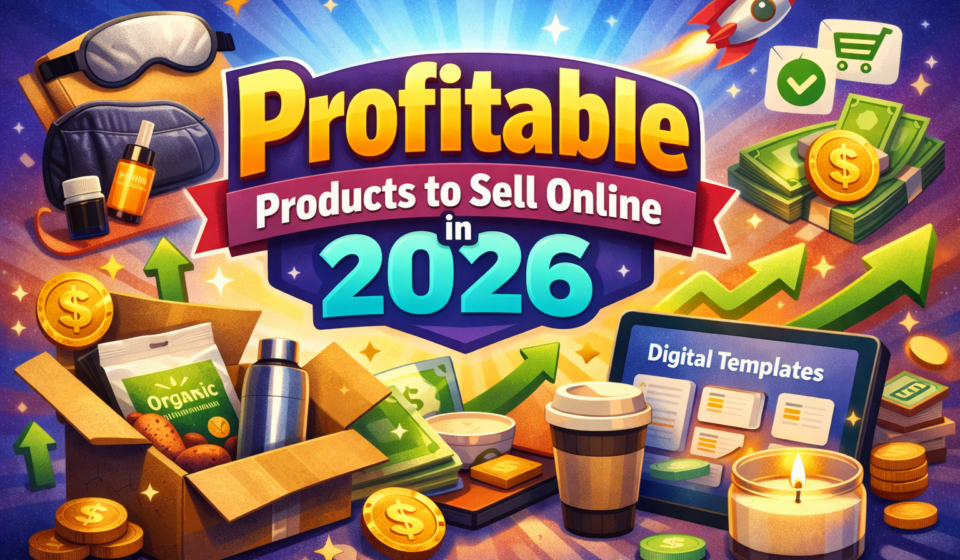
Profitable Products to Sell Online in 2026: What’s Selling, Why It’s Selling, and How to Pick Winners

If you’re trying to figure out what to sell online in 2026, here’s the real advantage you have:
You don’t need to “guess” what’s profitable anymore.
Consumer behavior is shifting fast—toward value, trust, and convenience—and the categories that win are the ones that match those priorities. NielsenIQ notes that “caution is the new normal” going into 2026, with shoppers becoming more intentional about spending. (NIQ)
At the same time, e-commerce growth is projected to be pushed forward by categories like food and beverage, which keep gaining e-commerce share and repeat purchases. (EMARKETER)
So what should you sell?
Below is a practical, ecommerce-friendly list of profitable product categories and product types for 2026, plus a simple framework to choose the right products for your store.
What makes a product profitable in 2026?
Profitability isn’t just about trending—it’s about margin + demand + repeatability + low friction.
In 2026, “value” is being redefined: shoppers weigh price and quality, and trust is a major buying trigger. Salsify reports that brand trust influences people to spend more, and that quality/value strongly influences trust. (Salsify)
That means profitable products tend to have:
- Clear value (solves a problem or improves life)
- Easy-to-explain benefits
- Healthy margin (room for ads + shipping + fees)
- Low return risk (fewer “not as described” surprises)
- Strong visuals (easy to sell with short video)
The most profitable product categories to sell online in 2026
1) Health, sleep, and “at-home wellness.”
Wellness continues to be a high-demand, high-margin category—especially products that support sleep, recovery, and daily routines.
Examples (2026 demand signals include):
- Mouth tape, sleep bonnets, sauna blankets (all showing meaningful interest growth in trend tracking lists) (Glimpse)
- Wearable-style wellness and tracking interest also shows up in 2026 shopping trend coverage. (NBC News)
Why it’s profitable:
- Strong “results” framing (before/after, routine content)
- Great for bundles (sleep kit, recovery kit)
- Often repeat or upgrade purchases
Best way to sell it: Build a “routine” offer (Night routine kit, Sunday reset kit) and market with short-form video.
2) Beauty and personal care (especially trust-driven brands)
Beauty remains a top-performing ecommerce category, and consumer insights highlight continued growth and behavior shifts across categories like beauty. (NIQ)
Why it’s profitable:
- High perceived value
- Content-friendly (tutorials, transformations, “GRWM” formats)
- Strong upsell potential (bundles, refills, accessories)
Best way to sell it: Lean into “problem-specific” (acne routine, anti-frizz kit, sensitive skin set) and emphasize trust signals (reviews, ingredients, guarantees).
3) Home upgrades, organization, and “micro-renovations.”
Home spending isn’t only about massive remodels—Pinterest trend reporting highlights smaller “micro-renovations” and comfort-focused home updates, along with cozy nooks and personality-driven décor. (Better Homes & Gardens)
Profitable product angles:
- Space-saving organization tools
- Cozy home comfort items
- Kitchen “upgrade” accessories
- Aesthetic décor that photographs well
Why it’s profitable:
- Visual category (perfect for Reels/TikTok/Pinterest)
- Bundles sell well (starter sets)
- Evergreen demand + seasonal boosts (spring refresh, back-to-school)
4) Food & beverage (and repeat-purchase consumables)
eMarketer’s 2026 category forecast notes that food and beverage is a major driver of e-commerce growth. (EMARKETER)
What this means in practice:
- Consumables can create recurring revenue
- Smaller items can be subscription-friendly (monthly restock kits)
- Bundles and variety packs improve average order value
Profitable examples:
- Specialty snacks (niche diets)
- Functional beverages (calming, focus, hydration)
- Coffee/tea accessories + refills
5) “Value-forward” lifestyle products that still feel premium
NielsenIQ’s outlook for 2026 focuses on cautious, intentional consumption—people want value, but they still buy “nice” things if they trust the brand and feel it’s worth it. (NIQ)
This creates a sweet spot:
- Affordable premium (mid-tier pricing, strong presentation)
- Products that look expensive but are operationally simple
Examples:
- Desk accessories/workspace upgrades
- Minimalist travel accessories
- Smart organization products (kitchen, closet, car)
6) Sustainable swaps and “small habit” eco-products
Customers keep adopting simple sustainability upgrades (reusable, long-lasting, minimal waste). Items like glass straws appear in trend product lists, reflecting continued interest in small, practical swaps. (Glimpse)
Why it’s profitable:
- Easy story + clear purpose
- Strong brand identity potential
- Bundles work well (“Starter sustainability kit”)
7) Digital products (highest margin category)
Digital products remain one of the most profitable models because there’s no shipping, no inventory, and margins are usually far higher than physical goods. Shopify’s 2026 “Google Trends products” content focuses heavily on identifying what people want and validating demand. (Shopify)
Profitable digital product types for 2026:
- Templates (Notion, Canva, spreadsheets)
- Prompt packs (AI workflows by niche)
- Mini-courses and micro-learning
- Swipe files (ads, emails, landing pages)
- Bundled toolkits for specific outcomes
Best way to sell it: Pair a free lead magnet + email funnel + low-ticket offer + upsell bundle.
Specific product ideas that tend to perform well in 2026
Here are examples pulled from 2026-focused trend lists and consumer trend coverage, plus categories repeatedly highlighted by major retail trend reporting:
- Sleep & wellness accessories like mouth tape, sleep bonnets, sauna blankets (Glimpse)
- Wearable health/wellness tracking (not just devices—accessories and routines around them) (NBC News)
- Home comfort + décor refresh items aligned with “comfort + personality” home trends (Better Homes & Gardens)
- Food & beverage ecommerce products with repeat-buy behavior (EMARKETER)
(Your best move is to select a narrow angle—like “sleep routine” or “home refresh”—then build bundles and content around it.)
How to pick the right profitable products for your store
Use this quick scoring method (fast and realistic):
Step 1: Demand check
- Is it trending or steady? (Google Trends / social proof)
- Do people search for it with buying intent? (autocomplete, “best ”, “ reviews”)
Step 2: Margin check
- Can you price it at least 2–3× landed cost (product + shipping)?
- If you plan to run ads, can you still profit after CAC?
Step 3: Return-risk check
Avoid products that commonly cause returns:
- unclear sizing
- fragile shipping
- “looks different in real life”
Step 4: Content check
Ask: can this be sold in a 15-second video?
If yes, marketing is easier.
Step 5: Trust check
Since brand trust drives willingness to spend more, build trust signals into your product pages from day one (reviews, guarantees, transparent policies). (Salsify)
Bundles are the 2026 profit multiplier
If consumers are cautious, bundles make decision-making easier because they increase perceived value without needing a big discount.
Bundle examples:
- Sleep Routine Kit (bonnet + mouth tape + sleep mask)
- Home Refresh Kit (organizers + labels + drawer inserts)
- Creator Toolkit (templates + prompts + posting calendar)
- Pantry Upgrade Pack (storage + labels + scoop tools)
Quick “what to sell” shortlist by store type
If you want fast-moving physical products
- Wellness + sleep accessories (Glimpse)
- Home organization + comfort décor (Better Homes & Gardens)
- Value-forward beauty/personal care (trust-driven) (NIQ)
If you want repeat revenue
- Food & beverage consumables / restock kits (EMARKETER)
- Subscription bundles (templates, monthly resources)
If you want maximum margins
- Digital products (templates, micro-courses, toolkits) (Shopify)
Final thoughts: the profitable move in 2026 is “trusted value.”
The winners in 2026 won’t just be the flashiest trends. They’ll be the brands and sellers who deliver value people can feel, packaged with trust and simple buying decisions—because cautious consumption is shaping how people shop. (NIQ)
If you want, tell me your store model (dropshipping, brand, digital-only, mixed) and your niche direction (wellness, beauty, home, business tools, etc.), and I’ll give you:
- 20 product ideas tailored to your store
- a bundle plan (3 bundles + pricing strategy)
- a content plan (10 Reels/TikToks that sell them)